
Blog
New EC Guidelines for Asbestos‑Related Health and Safety Risks at Work
12 Feb 2026
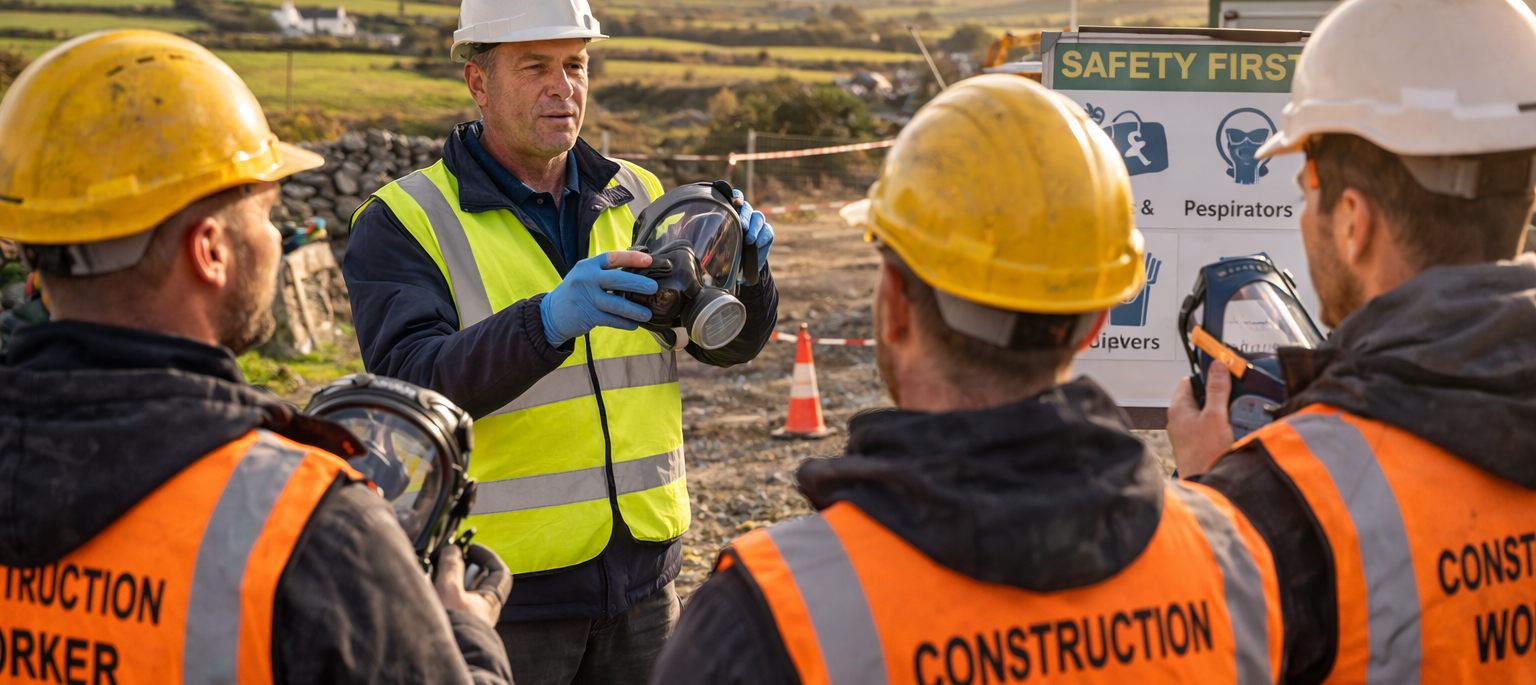
Asbestos remains one of the most serious occupational hazards across Ireland, decades after its widespread use in construction and industrial materials. Even though deliberate use of asbestos was banned in the EU years ago, millions of workers are still at risk during demolition, renovation, and waste handling involving older buildings.
Airborne asbestos fibres are carcinogenic and linked to diseases such as mesothelioma, lung cancer and asbestosis. To support employers, workers and national authorities in protecting health and safety more effectively, the European Commission adopted new Guidelines for managing asbestos‑related health and safety risks at work on 18 December 2025.
These guidelines are designed to help organisations put the latest legal requirements (especially those from the amended asbestos at work Directive) into practical action.
What the New Guidelines Cover
The guidelines build on the revised version of the Asbestos at Work Directive and provide practical, non‑binding advice on how to identify, assess and control asbestos risks in the workplace.
They assume that asbestos may still be present in many structures and that exposure must be reduced as far as technically possible. At their core, the guidelines give clear direction on key stages of asbestos risk management:
-
Systematic asbestos identification and assessment - before any work begins, employers must check for asbestos and assess the risk to workers.
-
Planning and notification - work that could disturb asbestos must be planned in detail. Notifications to competent authorities or safety representatives should include key information such as the work description, start date, location, type and amount of asbestos involved.
-
Exposure control measures - the guidelines cover practical steps for keeping airborne fibres down, including containment, dust suppression, ventilation, hygiene facilities and suitable personal protective equipment (PPE).
-
Training and competence - workers who are likely to come across asbestos need the right training and a genuine understanding of the hazards they're dealing with and the precautions that go with them.
-
Health surveillance - regular monitoring and medical checks are there to catch any health effects as early as possible, rather than letting problems go undetected.
-
Documentation and communication - keeping records of assessments, notifications, controls and training helps meet legal duties and supports transparency.
The guidance includes examples and case studies to help enterprises, especially small and medium‑sized organisations, apply good practices consistently across sectors such as construction, renovation, waste management and emergency response.
Never Assume Asbestos is No Longer a Threat
Even with the ban in place, fibres hiding in older buildings are still putting workers in danger. The new EU guidelines cut through that uncertainty by giving businesses something concrete to work with i.e.practical steps that go further than the legal basics and help organisations plan ahead and genuinely protect their people.
At OHSS, we’ve been protecting Irish businesses against the dangers of asbestos since 2001 and we’re here to help to keep you and your employees safe. For help in dealing with suspected asbestos in your premises, call us today on (01) 6905907 or browse our website to find out about our complete range of services.
‹ BACK TO BLOG

5c Fingal Bay Business Park,
Harry Renolds Road,
Balbriggan,
Co. Dublin
Ireland
K32 XT04
Website Designed & Developed by: NiceOne


