

Blog
What Types of Insulation Contain Asbestos?
6 Aug 2026
 What Types of Insulation Contain Asbestos?
Asbestos was used in construction for decades because it was
incredibly good at insulating and resisting heat. It was used in
everything from buildings and pipework to boilers and heating systems.
As we explained in our previous article, The Many Ways in Which Asbestos Has Been Used
the sheer scale of asbestos use during the latter half of the 20th
century means that it can still be found in older buildings across
Ireland today.
One of the areas where asbestos was widely used was insulation.
So, what types of insulation could contain asbestos, and where are you
most likely to find it?
Asbestos Insulation Around Pipes & Boilers
Asbestos was widely used around pipes, boilers and heating systems
because of its excellent heat-resistant properties.
It could be used around hot water pipes and boilers, as well as in
other areas where high temperatures were a concern.
Asbestos-containing insulation could take a number of forms, including
pipe coverings, lagging, boards and other insulating materials.
The problem is that this material can become damaged over time.
It can also be disturbed during maintenance or repair work. Plumbers,
electricians, heating engineers and other tradespeople working in
older buildings may come across it without realising what it is.
Drilling, cutting, removing or damaging asbestos-containing insulation
can release fibres into the air.
Asbestos in Attics & Walls
Asbestos was also used as insulation in some older buildings,
including in attic and wall areas.
There are different types of insulation materials, and some older
materials may contain asbestos. The problem is that you can't always
tell what you're looking at simply by looking at it.
This is particularly important when carrying out work in an attic,
wall cavity or other area where older insulation is present. Moving,
cutting or removing an unknown material could disturb asbestos if it
is present.
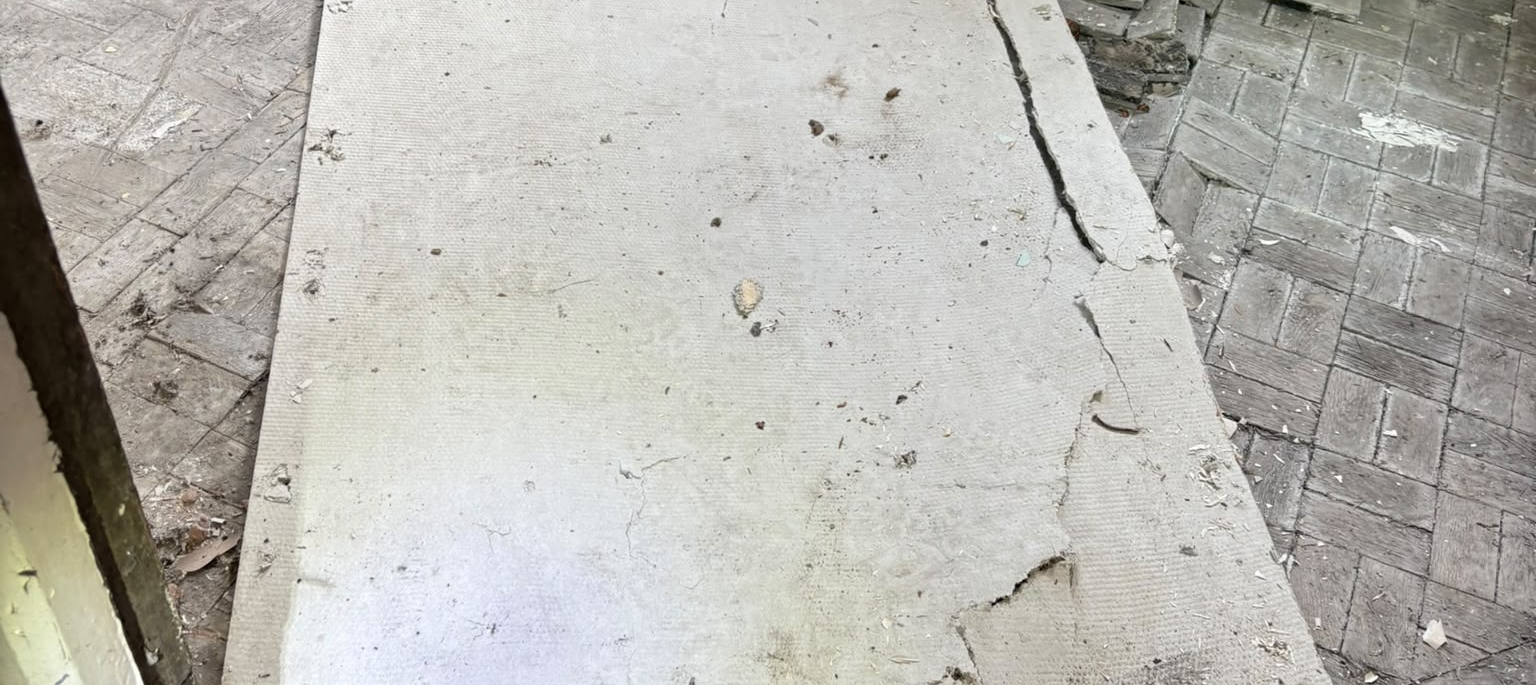
There were also asbestos-containing insulation boards and other
materials used in buildings, particularly where fire protection was
required.
This is why you should never assume that insulation is safe simply
because it doesn't look like asbestos.
What Should You Do If You Find Old Insulation?
If you're carrying out work on an older building and come across
insulation that you suspect may contain asbestos, STOP.
Don't pull it out, cut it, drill through it or attempt to remove it yourself.
The safest approach is to leave the material undisturbed and get
professional advice. An appropriate asbestos survey, and where
necessary sampling and analysis, can establish whether
asbestos-containing materials are present and help assess the risks
before further work takes place.
This is particularly important when you're carrying out refurbishment
or demolition work. The last thing you want is to disturb asbestos
halfway through a project without knowing that it's there.
Don't Take Chances With Asbestos
Asbestos is no longer permitted for new use, but that doesn't mean it
has disappeared. It is still present in older buildings throughout
Ireland. Insulation around pipes and boilers, attic and wall
insulation and insulation boards are just some of the places where
asbestos-containing materials may be found.
If you're responsible for an older building, or you're a contractor
carrying out work on one, it's important to know what you're dealing
with before you start.
The rules around asbestos exposure at work have also been strengthened
in Ireland. New regulations came into effect on 21 December 2025,
providing greater protection for workers who may be exposed to
asbestos.
At OHSS, we've been helping Irish businesses manage the dangers of
asbestos since 2001. If you need an asbestos survey, risk assessment,
air monitoring or advice on asbestos removal, call us today on (01) 6905907
or visit www.ohss.ie to find out more about our services.
‹ BACK TO BLOG

© 2023 OHSS
5c Fingal Bay Business Park,
Harry Renolds Road,
Balbriggan,
Co. Dublin
Ireland
K32 XT04
Website Designed & Developed by: NiceOne
5c Fingal Bay Business Park,
Harry Renolds Road,
Balbriggan,
Co. Dublin
Ireland
K32 XT04
Website Designed & Developed by: NiceOne


